The Bahamas: 700 Islands, One Right Pace
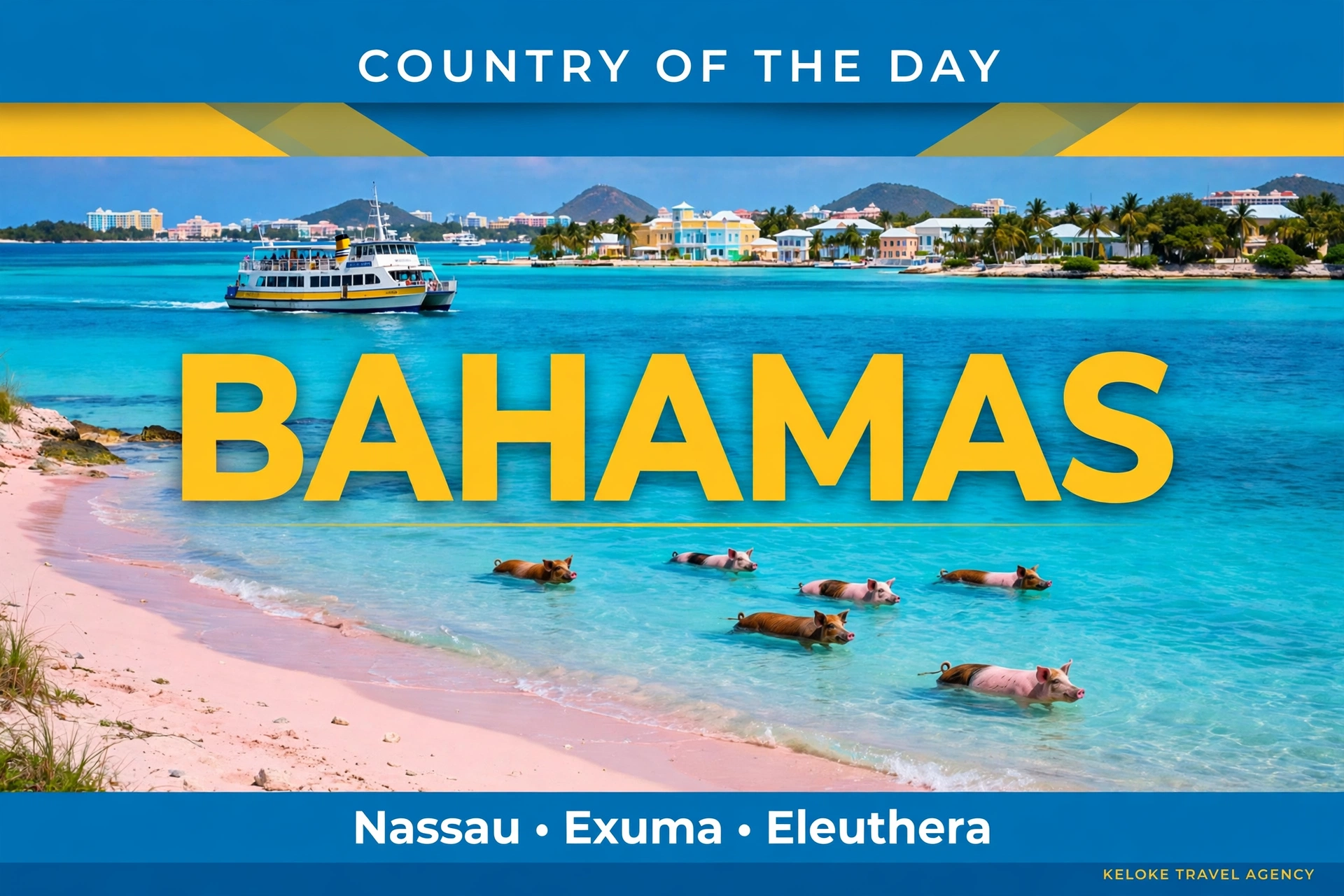
The Bahamas is not one destination — it is an archipelago of about 700 islands and cays stretched over 100,000 square miles of some of the clearest water on earth, and the classic mistake is trying to see it all in one trip. The classic success is picking one home base and one adventure: Nassau for the first trip, an Out Island for the second, and day boats for everything in between. Pick the base first; the packing — beach, boat, and ferry days — follows.
The islands, one by one
- Nassau & Paradise Island (New Providence): the arrival chapter and most travelers’ base — the Straw Market and Bay Street, the Queen’s Staircase and Fort Fincastle, Cable Beach, and across the bridge on Paradise Island the Atlantis resort, Marina Village, and Cabbage Beach. Cruise passengers get the port version; staying over gets the real one.
- Grand Bahama & Freeport: the second city — Lucayan National Park’s caves and mangrove boardwalks, Port Lucaya Marketplace, and some of the closest shark and reef diving to Florida, a short flight or ferry from Fort Lauderdale.
- The Exuma Cays: the adventure chapter — a chain of 365 cays, the famous swimming pigs at Big Major Cay, nurse sharks at Compass Cay, the Thunderball Grotto snorkel, and sandbars that appear at low tide and vanish by evening. Usually done as a full-day boat tour from Nassau or a stay in George Town, Great Exuma.
- Eleuthera & Harbour Island: the quiet, pink chapter — Harbour Island’s pink-sand beach, the Glass Window Bridge where the dark Atlantic meets the calm green Bight, and a slow, boutique pace completely different from Nassau.
- Bimini: the closest chapter — about 50 miles from Florida, Hemingway’s old fishing island, big-game fishing, and dolphin and shark encounters, reachable by ferry from Fort Lauderdale.
- Andros & the Abacos: the wild and the sailing chapters — Andros is the largest and least developed island, home to blue holes and the world’s third-largest barrier reef; the Abacos are the boating capital, a chain of cays built around Marsh Harbour and Hope Town’s striped lighthouse.
Culture notes
English is the official language, with Bahamian Creole spoken in everyday life — and Haitian Creole is widely heard too, spoken by the large Haitian community that makes up a significant share of the population, so Haitian travelers will hear home in Nassau’s markets. Junkanoo — the Christmas-season street festival of costume, drums, and cowbells — is the cultural heartbeat. The conch is the national dish in every form (salad, fritters, cracked), and the local rule on the Out Islands is simple: the ferry schedule is the schedule, and everything else adjusts.
When to go
December through mid-April is the high season: the driest weather, water at its clearest, full tour schedules, and the highest prices — book boats and rooms ahead. May through November is hurricane season (officially June 1–November 30), with the highest storm risk in August–October; prices drop, the water is at its warmest, and flexible plans plus travel insurance earn their money. Summer brings the heat and humidity in full — and the best swimming of the year.
Practical tips
- U.S. visitors: visa-free, up to 8 months: U.S. citizens are visa-exempt for the Bahamas for stays of up to 8 months as bona fide visitors. You still need a valid passport, a return or onward ticket, and you may be asked to show sufficient funds for the stay.
- Haitian passport holders — physical visa, arranged before travel: Haiti is NOT on the visa-exempt list, and Haitian nationals are the stated exception to the Bahamas eVisa route — they must obtain a physical visa from a Bahamian embassy or consulate before traveling. Holders of a valid U.S. or Canadian permanent-residence permit are visa-exempt for up to 30 days. Do not book non-refundable travel before the visa is in hand, and re-check the current rule with Bahamas Immigration before booking (see KELOKE’s Haitian passport guide for the full country map).
- Passport validity: carry a passport valid well beyond your return date — sources commonly require at least 6 months’ validity when transiting a third country; never let it run close.
- Currency is the Bahamian dollar (BSD) — pegged 1-to-1 with the U.S. dollar, and U.S. dollars are accepted everywhere. Spend or convert Bahamian change before leaving; it is not exchangeable outside the Bahamas.
- Power is the easy part for Americans: the Bahamas uses the same Type A/B sockets and 120V as the United States — U.S. devices plug straight in, no adapter, no converter.
- Driving is on the LEFT: a British inheritance that surprises Americans at the first roundabout — most visitors are happier with taxis, jitney buses, and tour boats, and on the Out Islands a rental golf cart is often the whole transport plan.
- Island-hopping runs on boats and small planes: domestic flights from Nassau (Lynden Pindling International, NAS) and scheduled ferries connect the main islands — build buffer time around every connection, because weather and loading set the real timetable.
What to pack for the Bahamas
Beach, boat, and ferry days — often all three before dinner. Our country picks: a weekender bag with its own toiletry bag so one light bag covers a Nassau weekend or a ferry hop, packing cubes that keep dry clothes, swimsuits, and the wet set in separate worlds, waterproof shoe bags so sandy, seawater-soaked sandals never touch clean clothes, a 3-in-1 handheld fan that doubles as a power bank and flashlight for hot market afternoons and open ferry decks, and a Bluetooth tracker in your bag for the airport-ferry-excursion chain where bags go missing. Find them in the KELOKE shop.
