
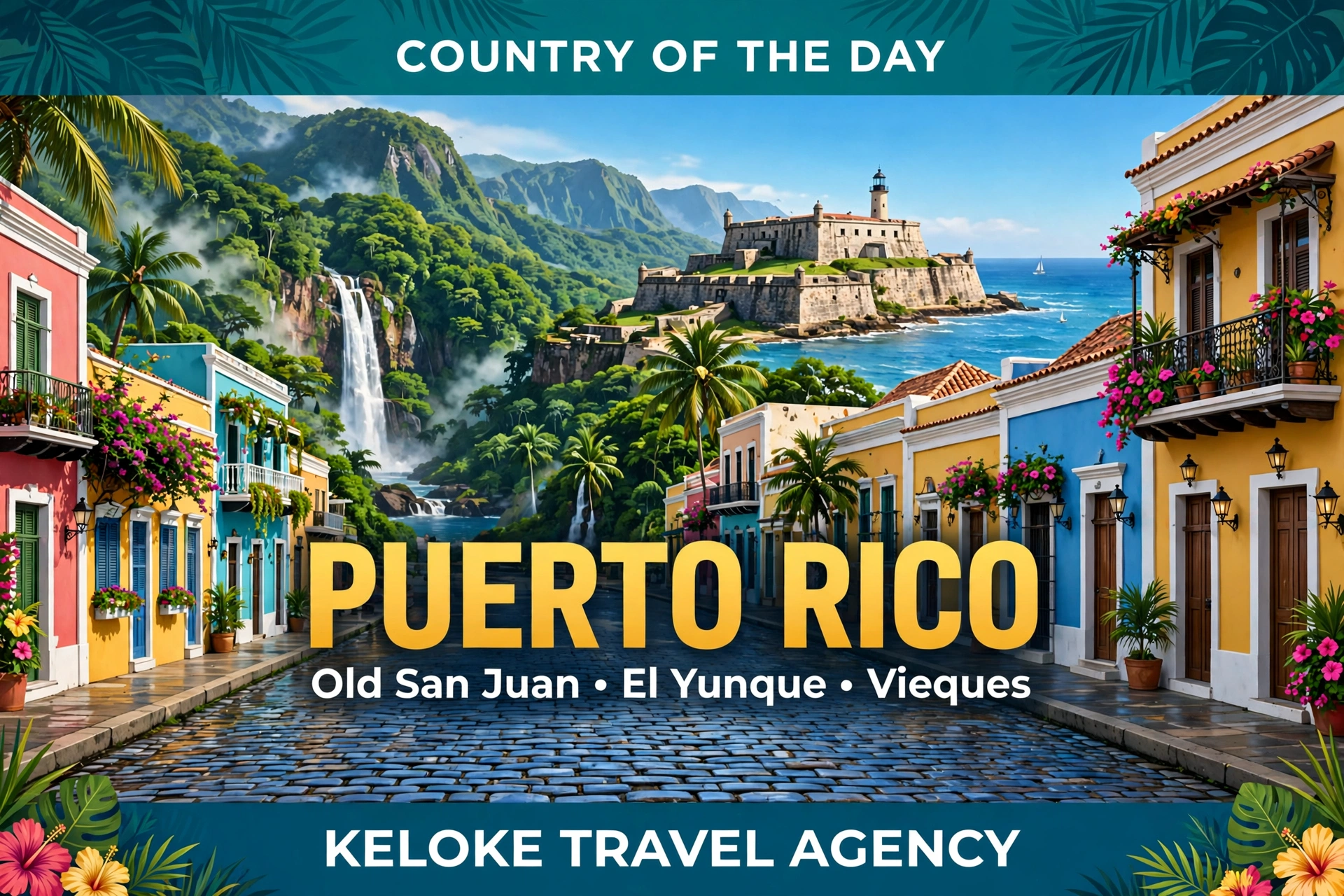
Puerto Rico: The Island That Runs on Two Rhythms
Puerto Rico is the Caribbean trip with no passport stamp for Americans — and the classic mistake is treating it as only a beach. The island runs on two rhythms: the 500-year-old cobblestone capital and the wild green interior, with a glowing bay and two small sister islands offshore. The classic success is one base in San Juan, one rainforest day, and one island hop. Pick the rhythm first; the packing — rain, heat, and cobblestones — follows.
The regions, one by one
- Old San Juan & the metro coast: the arrival chapter — blue cobblestone streets, the El Morro and San Cristóbal forts, the cathedral and Paseo de la Princesa, with Condado and Isla Verde beaches a short ride east. Most first trips base here and day-trip everything else.
- El Yunque National Forest: the only tropical rainforest in the U.S. National Forest system — waterfalls, natural pools, and trails under a canopy that rains on schedule almost every afternoon. Go early, book the reservation window when required, and expect wet trails in any season.
- The bioluminescent bays: three of the world’s few glow-in-the-dark bays — Mosquito Bay on Vieques (the brightest), Laguna Grande at Fajardo, and La Parguera in the southwest. They are a new-moon experience: the darker the night, the brighter the water, so the calendar matters as much as the booking.
- Vieques & Culebra: the island-hop chapter, reached by the Ceiba ferry or a short flight — Culebra’s Flamenco Beach is regularly ranked among the world’s best, and Vieques pairs wild horses and empty beaches with the bio bay after dark. Ferry tickets sell out; book ahead and build buffer time.
- The west & south coasts: Rincón’s surf breaks and sunsets, Cabo Rojo’s salt flats and lighthouse, and Ponce — the island’s second city, with its red-and-black firehouse museum and a slower, more local pace than the capital.
- The Cordillera & coffee country: the mountain interior — hacienda coffee tours around Jayuya, Adjuntas and Lares, cooler air, and the island Puerto Ricans themselves escape to on weekends.
Culture notes
Spanish and English are both official, and daily life runs in Spanish first — a greeting in Spanish opens doors everywhere. This is the birthplace of salsa’s New York chapter and of reggaetón, and music is not background here, it is the schedule: bomba in Loíza (the island’s Afro-Puerto Rican heartland), plena in Ponce, and live music in every plaza. The food rule is simple: find the chinchorros — the small roadside kiosks — for alcapurrias, bacalaítos and mofongo done the local way.
When to go
December through April is the dry, high season: the easiest beach weather, full tour schedules, the highest prices, and the San Sebastián Street Festival in January filling Old San Juan. May through November is hurricane season (officially June 1–November 30, highest risk August–October): prices drop, the rainforest runs at its greenest, and flexible plans plus travel insurance earn their money. The bio bays glow brightest on the darkest, warmest nights — late spring through fall, away from the full moon.
Practical tips
- U.S. visitors: no passport needed: Puerto Rico is a U.S. territory, so flights from the mainland are domestic — U.S. citizens travel with a government photo ID (REAL ID-compliant for TSA), no passport and no visa. Green-card holders travel freely the same way.
- Haitian passport holders — a U.S. visa is required, arranged before travel: there is no separate Puerto Rico visa. Haitian nationals need the same valid U.S. visa (usually B1/B2) required for the mainland United States, in a valid passport, before booking travel; Visa Waiver Program nationals use an approved ESTA instead. Do not book non-refundable travel before the visa is in hand (see KELOKE’s Haitian passport guide for the full country map).
- Currency is the U.S. dollar: no exchange, no conversion math — cards work almost everywhere, and cash is for chinchorros, ferries and small towns.
- Power is the easy part: Puerto Rico uses the same Type A/B sockets and 120V as the mainland United States — U.S. devices plug straight in, no adapter, no converter. The grid can still flicker outside the metro area, so a power bank earns its place.
- Spanish helps, English works: in San Juan and the tourist corridors English is widely spoken; in the interior and the west, basic Spanish phrases carry the day — and are warmly received.
- Island-hopping runs on the Ceiba ferry and small planes: Vieques and Culebra ferries are cheap, popular, and capacity-limited — residents get priority boarding, so book online ahead, arrive early, and never schedule a same-day flight home after a ferry return.
What to pack for Puerto Rico
Rainforest rain, Old San Juan heat, and ferry days — often all three before dinner. Our country picks: a 3-in-1 handheld mini fan that doubles as a power bank and flashlight for cobblestone afternoons, a collapsible water bottle for El Yunque trails, waterproof shoe bags so rainforest mud and wet sandals never touch clean clothes, compression packing cubes that keep beach, trail and city clothes in separate worlds inside one bag, and a 20,000mAh power bank for long tour days, flickering grids and a phone that has to survive to photograph the bio bay at night. Find them in the KELOKE shop.
