Panama: One Canal, Two Oceans, a Whole Continent in Miniature
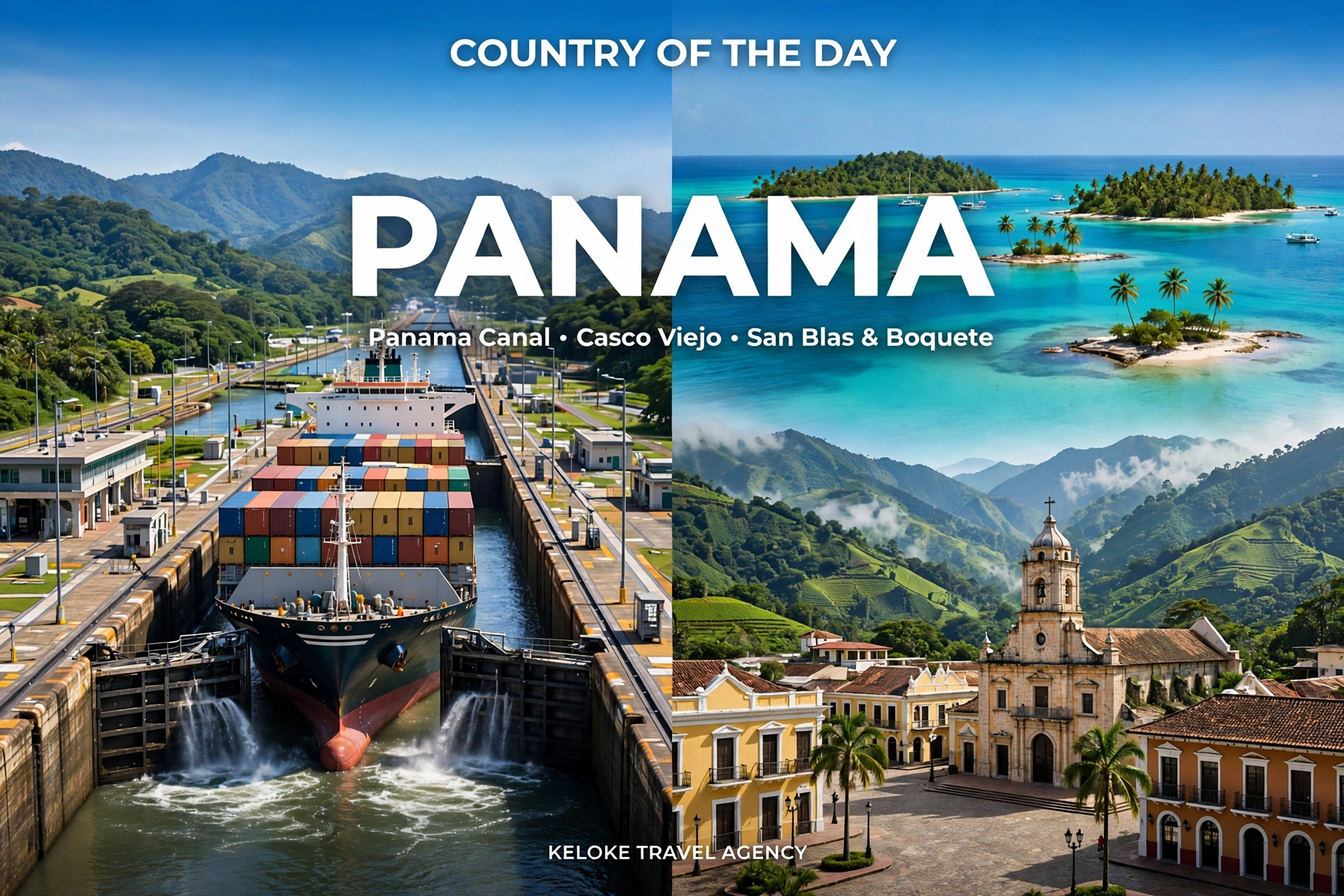
Panama is the trip that refuses to be one thing: a working wonder of engineering where supertankers rise and fall in front of you, a 500-year-old old town of plazas and rooftop bars, Indigenous-run Caribbean islands with no cars and no resorts, an Afro-Caribbean archipelago built for slow days, and cool coffee highlands where the sunrise can show you both oceans at once. It is the narrow waist of the Americas — about 80 kilometres of land holding the Pacific and the Atlantic apart — and the planning rule is simple: Panama City is the hub, every region is a short hop from it, and the dry season makes all of it easier.
The country, one by one
- The Panama Canal — Miraflores & Agua Clara: the headline — at the Miraflores Locks visitor centre on the Pacific side you stand on viewing decks as ships are raised and lowered through the chambers, with a museum that tells the whole brutal, brilliant story; on the Atlantic side, the Agua Clara visitor centre watches the newer, bigger Neopanamax locks at work. Go in the morning or late afternoon, when ship transits are most frequent.
- Casco Viejo & Panama City: the basecamp chapter — the UNESCO-listed old town of Spanish colonial churches, French-era plazas and restored mansions turned cafés and rooftop bars, the presidential palace on the waterfront promenade, and across the bay the modern skyline and the Amador Causeway, built from canal excavation rock, running out toward the Biomuseo, Frank Gehry’s riot of colour about Panama’s land bridge between continents.
- Guna Yala (San Blas): the island chapter — an autonomous Indigenous territory of some 365 low Caribbean islands, run by the Guna people on their own terms: palm islands the size of a football field, thatch cabañas, lobster for dinner, mola textile art, and boat transfers from the Cartí coast after a mountain road from the capital. No big resorts, patchy signal, cash only — that is the point.
- Bocas del Toro: the slow chapter — an Afro-Caribbean archipelago on the Caribbean side where the towns are built on stilts over the water, transport is by water taxi, and the days split between Red Frog Beach, starfish flats at Starfish Beach, surf breaks and cacao farms on Isla Colón and Bastimentos.
- Boquete & Volcán Barú: the highlands chapter — a cool mountain town in Chiriquí wrapped in coffee farms, famous for Geisha coffee, one of the most prized (and priciest) beans on earth; flower gardens, river rafting and cloud-forest trails fill the days, and the pre-dawn hike or 4×4 ride up Volcán Barú, Panama’s highest point at 3,475 metres, can show strong hikers both the Pacific and the Caribbean from one summit on a clear morning.
Culture notes
Panama is a crossroads by birth: Spanish colonial roots, Afro-Panamian culture carried from the canal-era Caribbean migrations (Congo traditions in Colón, calypso in Bocas), seven Indigenous peoples including the Guna, Emberá and Ngäbe, and Chinese, South Asian and American threads from a century of canal life. The pollera, the embroidered national dress, and tamborito music anchor the folklore calendar; Carnaval in Las Tablas and Panama City is one of Latin America’s biggest street parties. On the table: ceviche at the capital’s fish market, sancocho chicken soup, patacones (fried green plantain), ropa vieja, and coffee that the whole world wants. A fair warning about souvenirs: the famous “Panama hat” is woven in Ecuador — Panama’s own crafts are the Guna mola and Emberá basketry, and those are the ones to bring home.
When to go
Panama has two seasons and two coasts that do not always agree. The dry season, roughly mid-December to mid-April, is the easiest all-round window: canal skies are clear, roads to Cartí and the highlands behave, and Carnaval lands inside it. The rainy (“green”) season, roughly May to November, means lush hillsides and afternoon downpours rather than all-day rain — Panama City plans still work if you front-load your days. Bocas del Toro plays by Caribbean rules: its driest stretches are usually February–March and September–October, and it can rain there in any month. Boquete is spring-cool all year (pack a layer), and the Barú summit is a dry-season game — clear both-oceans sunrises are a December-to-April prize.
Practical tips
- U.S. visitors: visa-free, up to 180 days: U.S. citizens enter Panama as tourists without a visa for up to 180 days — among the most generous stays in the region. Bring a passport valid at least 3 months beyond entry (6 months is safer and what many airlines prefer), a return or onward ticket, and proof of at least US$500 in funds (cash, card or statement). Airlines check the onward ticket at check-in, and the number of days on your entry stamp is the law of your stay — read it before you leave the immigration desk.
- Haitian passport holders — Authorized Visa in advance, start early: Haiti is on Panama’s Authorized Visa list. Ordinary Haitian passport holders must have an authorized visa approved through a Panamanian consulate BEFORE travelling — approval can take up to 60 business days, so start months ahead, and do not finalize travel arrangements until the visa is granted. For air transit only, Haitian citizens have been exempt from Panama’s separate transit visa since Executive Decree No. 21 (August 25, 2025), so a layover in the airport’s international area no longer needs that transit visa — but entering Panama itself still requires the authorized visa above. One real exception: holders of a valid multiple-entry visa or residence permit from the U.S., Canada, the UK, an EU country, Australia, Japan, Singapore or South Korea (valid at least 6 months from arrival; U.S. permanent residents qualify on their green card) may enter without a Panamanian visa for up to 30 days. Haitian diplomatic passport holders are visa-exempt. Re-check the current rule with Panamanian Migration before booking (see KELOKE’s Haitian passport guide for the full country map).
- Passport validity: Panama’s official minimum is 3 months beyond entry, but carry 6 months when you can — airline check-in desks are the strictest readers of this rule.
- Yellow fever: a yellow fever vaccination certificate is required if you arrive from a country with yellow-fever transmission risk; the vaccine is recommended for jungle and Darién-adjacent travel in any case — carry the yellow card with your passport.
- Money is the U.S. dollar: Panama’s balboa is pegged one-to-one with the dollar and exists only as coins — U.S. paper bills are the everyday currency, and cards are widely accepted in the capital and tourist towns. Guna Yala runs on cash in small bills (territory entry and island fees are paid on the spot), and Bocas water taxis are cash work too.
- Power is plug-and-play for Americans: Panama runs 110V with Type A and B sockets — the same plugs and voltage as the United States, so U.S. devices plug straight in with no adapter or converter.
- Getting around: Panama City’s Metro and Metrobus cover the capital cheaply; domestic flights from Albrook airport reach Bocas, David (for Boquete) and the Pearl Islands in under an hour; the Cartí road for Guna Yala is 4×4-and-motion-sickness territory, arranged through your island host. Driving is on the RIGHT.
What to pack for Panama
Two coasts, one canal and a cool highland. Our country picks: a 3-in-1 handheld fan with power bank and flashlight for the humid lock-side viewing decks and island nights, a collapsible water bottle that empties flat for domestic island-hopper flights and fills at every stop, a 20,000mAh power bank with retractable cable for long transit days between the canal, Cartí and Bocas, waterproof shoe bags that keep wet-landing sand and rainy-season mud away from clean clothes, and an RFID passport holder and document organizer that keeps the passport, onward ticket and funds proof together for the immigration desk and the Guna Yala checkpoints. Find them in the KELOKE shop.
