Peru: Coast, Andes and Jungle — Three Worlds in One Country
Peru is three trips stacked into one ticket: a desert capital that became South America’s food capital, an Inca heartland where the cities sit higher than most airplanes’ cruising worries, and an Amazon basin that covers more than half the country. The planning rule that makes it work is altitude, not distance: Lima first, the Sacred Valley second, Cusco and Machu Picchu only once your body has caught up. Sequence it right and Peru is the trip people measure every other trip against.
The country, one by one
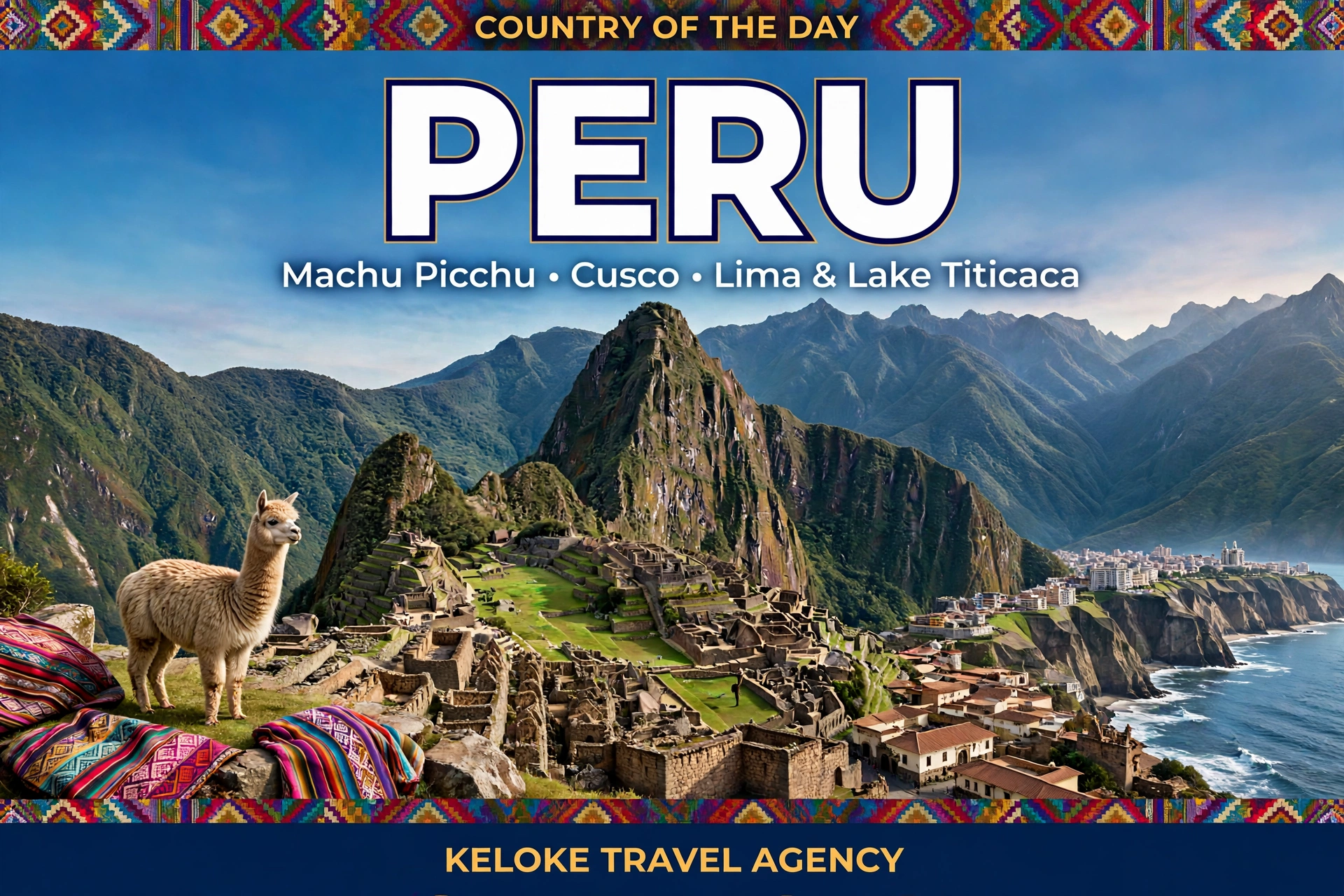
- Lima: the basecamp chapter — start at sea level in the capital, where the historic centre’s colonial balconies and catacombs sit a short ride from Miraflores’ cliff-top parks and Barranco’s street art and cafés. Lima is also the table: ceviche at lunch (never dinner, by local rule), lomo saltado, ají de gallina, and tasting menus that book out weeks ahead. Give Lima two days, not a layover.
- Cusco & the Sacred Valley: the Inca chapter — Cusco, the former Inca capital at about 3,400 metres, layers Spanish churches on top of Inca stonework that still fits together without mortar. Drop down into the Sacred Valley — Pisac’s terraces and market, Ollantaytambo’s fortress and living Inca town plan, the Maras salt pans and Moray’s circular terraces — which sits lower than Cusco and is the smart place to sleep your first highland nights.
- Machu Picchu: the headline — the 15th-century Inca citadel in its cloud-forest saddle between two peaks, reached by train to Aguas Calientes and a bus up the switchbacks, or on foot via the multi-day Inca Trail. Entry is by timed, circuit-based tickets that sell out in high season, the name on the ticket must match your passport, and the first visit runs with an official guide — book weeks to months ahead, not on arrival.
- Lake Titicaca & Puno: the high-lake chapter — at about 3,812 metres, the world’s highest navigable lake, where the Uros people live on floating islands woven from totora reeds and Taquile Island’s weavers produce textiles UNESCO lists as heritage. Puno is the shore base; the lake light at sunrise is the reason to stay a night, not day-trip it.
- The Peruvian Amazon — Puerto Maldonado & Iquitos: the jungle chapter — Puerto Maldonado, a short flight from Cusco, is the gateway to Tambopata’s macaw clay licks, oxbow lakes and giant river otters; Iquitos, reachable only by air or river, is the deep-Amazon city for lodge stays and pink river dolphins. This is a different Peru entirely: hot, humid, dawn-start days, and wildlife on the river’s schedule, not yours.
Culture notes
Peru’s layers run deep: Quechua and Aymara cultures that predate and outlasted the Inca Empire, Spanish colonial cities, Afro-Peruvian music and food traditions on the coast, and Amazonian peoples across the east. Quechua is co-official and widely spoken in the highlands — a few words (Allillanchu, hello; Sulpayki, thank you) open doors. On the table beyond ceviche: pachamanca earth-oven feasts, rocoto relleno in Arequipa, cuy as a traditional Andean dish visitors can choose for themselves, and pisco — Peru’s grape brandy — in its home country. Textiles are the souvenir with meaning: alpaca in Cusco and Taquile, woven with natural dyes and patterns that identify the maker’s community.
When to go
The Andes run on two seasons. The dry season, roughly May to October, is the classic window: clear Machu Picchu mornings, firm Inca Trail footing, and festival season in Cusco (Inti Raymi falls on June 24). The rainy season, roughly November to April, means greener valleys, thinner crowds and lower prices — but cloud can sit on Machu Picchu and highland roads and trains can be disrupted by heavy rain, so build in buffer days. Lima plays by opposite rules: its summer is December to April, while May to November brings the garúa, a cool grey sea mist. The Amazon is visitable year-round; its drier stretch, roughly May to October, makes trails and wildlife spotting easier.
Practical tips
- U.S. visitors: visa-free, up to 90 days granted: U.S. citizens do not need a Peruvian tourist visa. Bring a passport valid at least six months from the date of entry — airlines enforce this at check-in. Peru’s official tourism portal puts the maximum stay the authorities grant at 90 days; read the days you are actually given on entry (entry is now recorded digitally) before you leave the immigration desk, and plan to the stamp, not the brochure.
- Haitian passport holders — consular visa in advance: Ordinary Haitian passport holders require a tourist visa obtained BEFORE travel from a Peruvian consular office — the Peruvian government instructs applicants to apply at least 15 calendar days before the trip, and applying does not guarantee approval. Typical files include a passport valid at least six months, proof of travel to and from Peru, accommodation, a recent photo and proof of sufficient funds; the consulate can ask for more. Haitian diplomatic and official passport holders are visa-exempt. Confirm the current rule and your consulate’s exact list before booking anything non-refundable (see KELOKE’s Haitian passport guide for the full country map).
- Altitude is the real itinerary rule: Cusco (about 3,400 m), Puno (about 3,825 m) and the high passes sit well above the level where altitude sickness starts. Sleep lower in the Sacred Valley first, take the first 24–48 hours easy, eat light, go easy on alcohol, hydrate steadily, and let coca tea do its traditional work. Anyone with heart or lung conditions should talk to a clinician before a highland itinerary — and if severe symptoms hit, descending is the treatment, not pushing on.
- Machu Picchu tickets sell out: timed entry tickets for the citadel — and the separate Inca Trail permits — go weeks to months ahead in the dry season. Buy through the official channel, with the passport you will actually travel on; the ticket name and passport must match at the gate.
- Yellow fever is an Amazon question, not a highland one: no vaccination is required to enter Peru from the U.S., and yellow fever vaccination is not recommended for itineraries limited to Lima, Cusco, Machu Picchu and the highlands. It IS recommended for jungle areas below about 2,300 metres — Puerto Maldonado, Iquitos, Tambopata, Manu — ideally at least 10 days before entering the jungle. Malaria medication is likewise an Amazon conversation to have with a clinician; the highlands and Lima have no malaria transmission.
- Money is the sol: Peru’s currency is the sol (PEN). Cards are widely accepted in Lima and Cusco hotels and restaurants; markets, small towns, Sacred Valley sites and Amazon lodges run on cash in small notes — and torn or damaged U.S. dollar bills are routinely refused, so carry clean notes if you bring dollars to exchange.
- Power is 220V — check your devices: Peru runs 220V, double the U.S. standard, with Type A, B and C sockets (U.S.-style flat plugs fit many outlets). Phone and laptop chargers are almost always dual-voltage — read the label — but single-voltage U.S. appliances (hair dryers, some shavers) need a converter, not just an adapter.
- Getting around: domestic flights link Lima–Cusco, Lima–Puno (via Juliaca) and Lima/Cusco–Puerto Maldonado in about an hour each; the Cusco–Aguas Calientes leg is train-only (plus the Inca Trail on foot). Driving is on the RIGHT.
What to pack for Peru
Sea level, 3,400 metres and the jungle floor in one suitcase. Our country picks: a memory-foam neck pillow travel kit for the long-haul into Lima and the early domestic hops up to Cusco and Juliaca, Coolmax compression socks for long flights and circulation on high-altitude days, an 80-piece portable first aid kit for Inca Trail blisters, Sacred Valley scrapes and jungle bites hours from a clinic, a collapsible water bottle — steady hydration is the first altitude rule, and a bottle that folds flat rides every train and trail — and an RFID passport holder and document organizer that keeps the passport your Machu Picchu ticket is named on, your entry record and your consular paperwork in one hand at every checkpoint. Find them in the KELOKE shop.
