Philippines: 7,641 Islands, One Easy Door
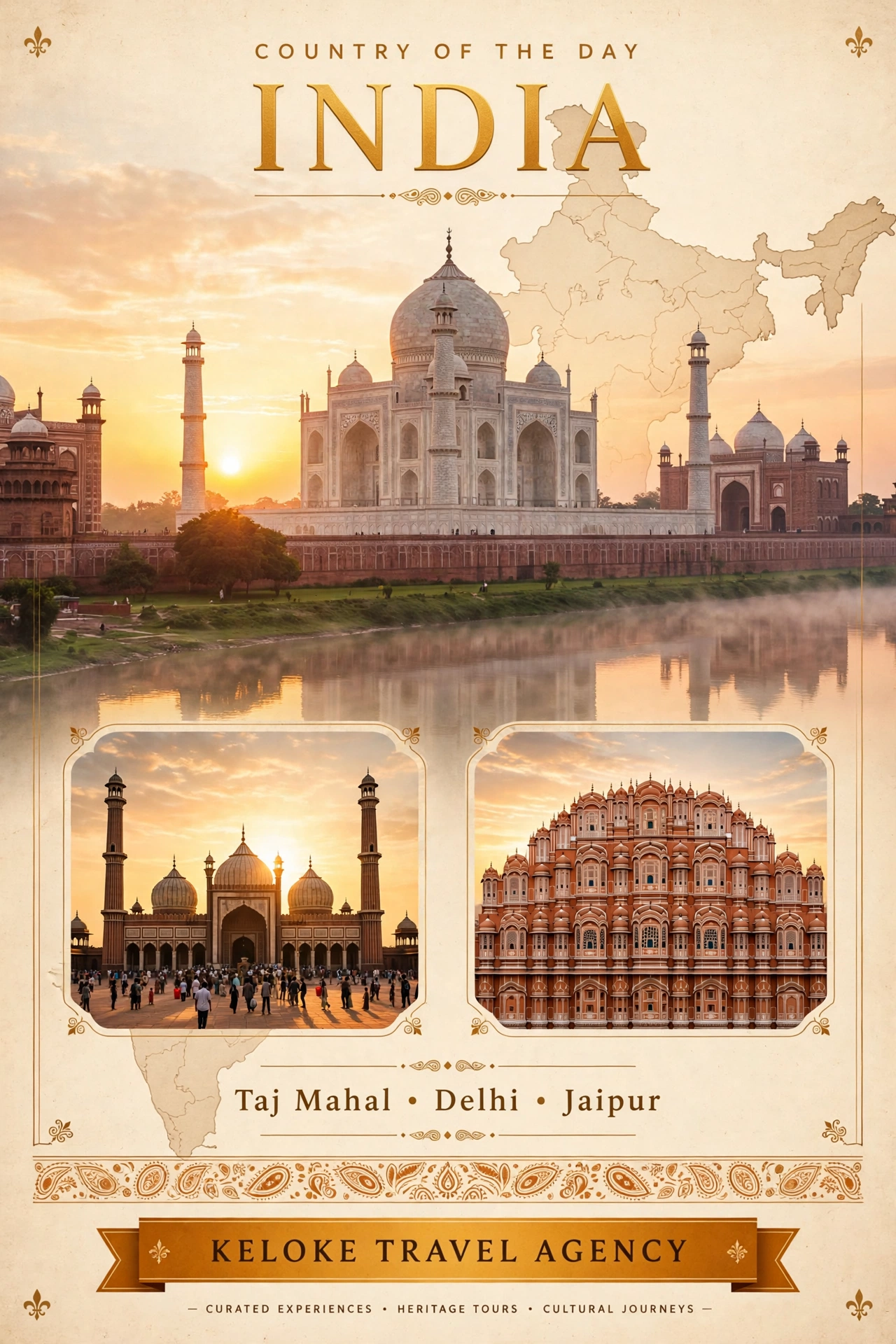
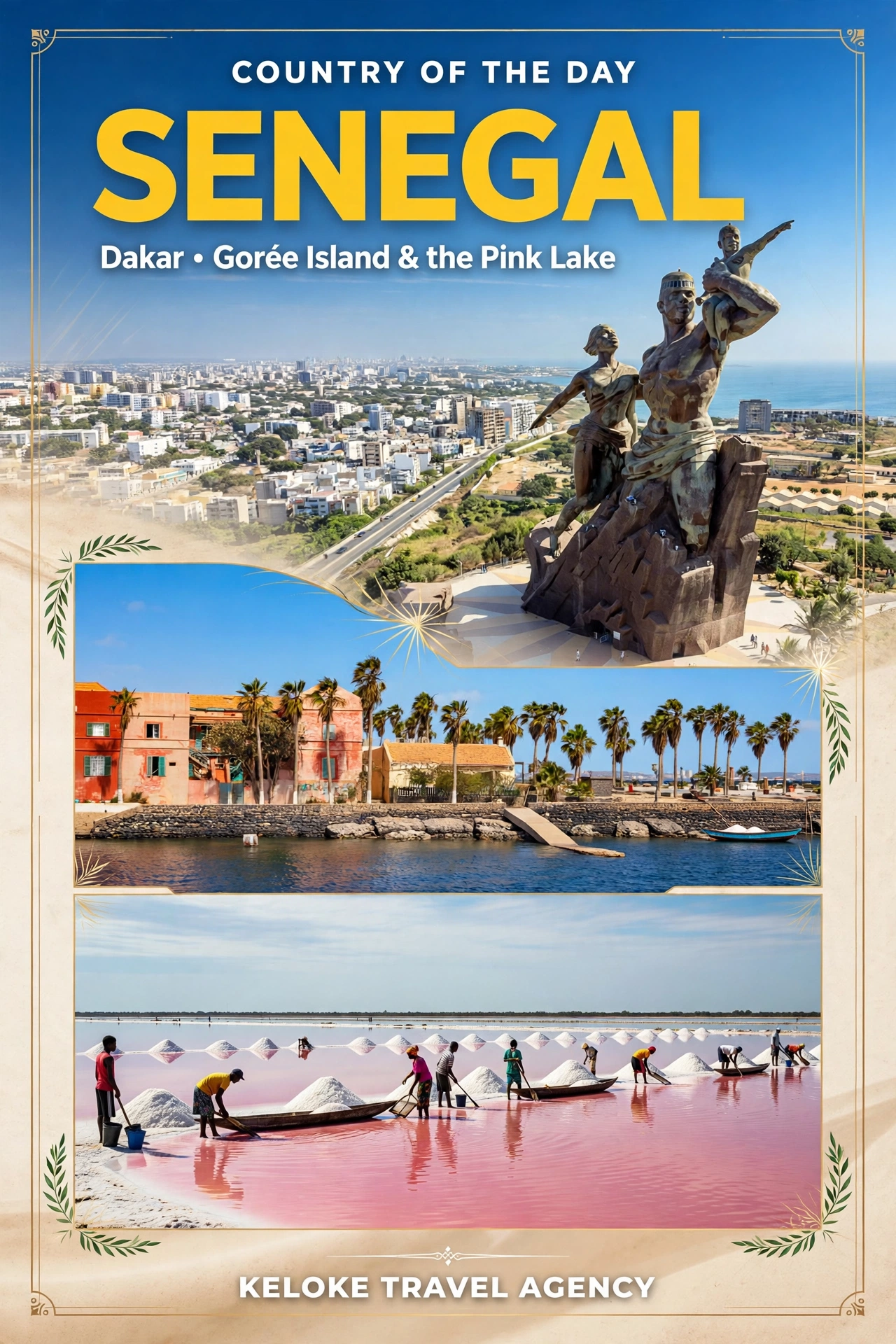
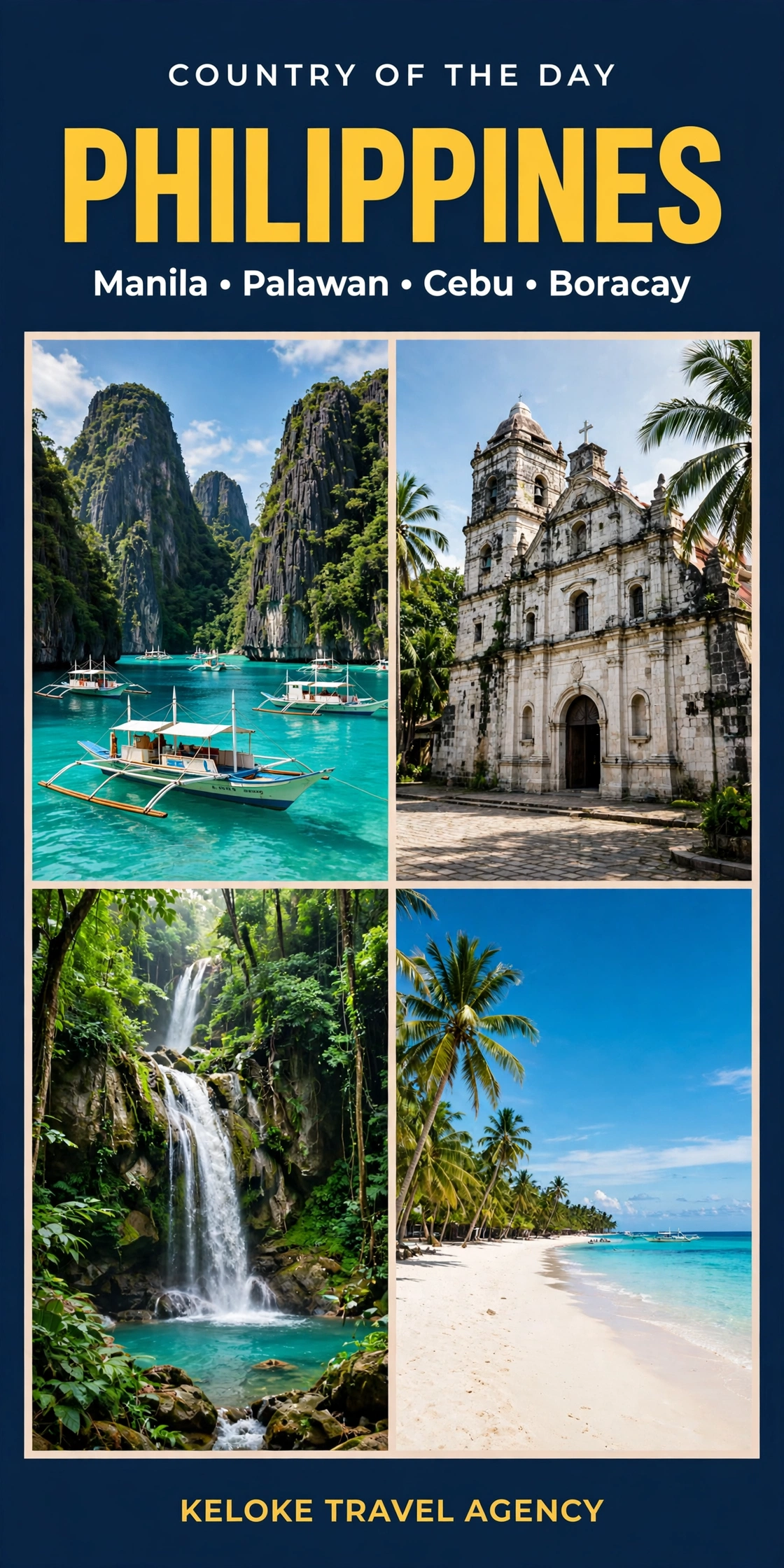
The Philippines is an archipelago of 7,641 islands strung between the Pacific and the South China Sea — Spanish colonial old towns, some of the clearest water on earth, and a people famous for treating a stranger like a cousin who arrived late. You can walk 400-year-old stone streets in Manila in the morning, fly to Palawan’s limestone lagoons the next day, and be swimming with sardine runs off Cebu by the weekend. November, when this guide lands, opens the dry season — the start of the best island-hopping window of the year. And the paperwork holds the pleasant surprise of this series: for once, both of Pop’s audiences walk through exactly the same door.
The country, one by one
- Manila: the headline chapter — start in Intramuros, the walled Spanish old town: Fort Santiago, San Agustin Church (a UNESCO site), and horse-drawn kalesa rides over cobblestones. Add Rizal Park, the National Museum complex, and Binondo — the world’s oldest Chinatown — for the food crawl. Give the capital two days, and use it as the hub it is: every island route starts here.
- Palawan — El Nido and Coron: the postcard chapter — the Bacuit Archipelago’s limestone karsts rising out of turquoise lagoons, hidden beaches reached by outrigger boat, and in Coron, World War II shipwrecks you can snorkel over in shallow, gin-clear water, plus the twin lagoons and Kayangan Lake, often called the cleanest lake in Asia. This is the Philippines people dream about; give it four days minimum.
- Cebu and Bohol: the variety chapter — Cebu for Magellan’s Cross, lechon (the roast pig Anthony Bourdain called the best ever), Kawasan Falls’ milky-blue pools, and Moalboal’s sardine run just off the beach. A short ferry away, Bohol answers with the Chocolate Hills’ 1,200 grass mounds, the wide-eyed tarsiers — among the world’s smallest primates — and the Loboc River. The two islands pair perfectly in one week.
- Boracay, Siargao and the north — worth knowing: the range chapter — Boracay’s White Beach, four kilometres of powder sand rebuilt after its famous 2018 clean-up closure, now capped and cleaner; Siargao for the Cloud 9 surf break and island-hopping lagoons; and up in Luzon’s mountains, the Banaue rice terraces, carved by hand some 2,000 years ago and still farmed today.
Culture notes
Filipino (Tagalog) and English are both official — English is everywhere, which makes the Philippines one of the easiest countries in Asia to travel independently. A salamat (thank you) and a smile open every door. The culture is a blend no other country has: Malay roots, three centuries of Spanish rule (the fiestas, the churches, the surnames), and a strong American century on top — expect karaoke at full commitment, basketball on every corner, and food that mixes all three worlds: adobo, sinigang, halo-halo for dessert. The Philippines is majority Catholic; dress modestly in churches, and join a fiesta if your dates land on one — every town has its own, and visitors are fed like family.
When to go
The dry season runs roughly November to April, and November — when this guide lands — is its opening act: the rains have eased, the islands are green, seas are settling, and the Christmas-season crowds have not yet arrived (the Philippines famously starts celebrating in September, so expect lights and music everywhere by now). The wet season, roughly June to October, brings typhoons that can scramble island ferries and flights — another reason November is the smart shoulder. Palawan and the Visayas are at their best from now through May; surf in Siargao peaks around September–November, so an early-November trip catches the tail of the swell.
Practical tips
- U.S. passport holders — visa-free 30 days: Americans are on the Philippines’ Executive Order 408 visa-free list. No visa, no fee, no application — you receive 30 days on arrival for tourism.
- Haitian passport holders — visa-free 30 days too, and do NOT buy an eVisa: Haiti is on the same E.O. 408 list (entry #74 on the DFA’s own table) — a Haitian tourist gets the same 30 visa-free days as a U.S. traveller. Ignore any site trying to sell a Haitian traveller a “Philippines eVisa” with a document checklist and a fee: for a normal tourist trip there is nothing to buy. A Haitian passport holder living in the US follows the Haitian rule — and here that rule is the same door.
- The two conditions that apply to both: your passport must be valid at least 6 months beyond your contemplated stay (the DFA’s exact wording — stricter than the ‘6 months from arrival’ some sites print), and you must hold a return ticket home or an onward ticket to your next destination. Tourism and short business only; working needs a different visa.
- Everyone — the free eTravel, within 72 hours, both directions: Whatever your passport, every international traveller must register on eTravel at etravel.gov.ph within the 72 hours before arrival — and again before departure. It is completely free (PHP 0.00), it issues a QR code to show at check-in and immigration, and it is a travel declaration, not a visa. Philippine embassies warn by name about look-alike sites charging PHP 1,000–5,000 for this same free form — only trust a site ending in .gov.ph, or the official eGovPH app.
- Want longer than 30 days? Extend in-country: Visa-free stays can be extended at the Bureau of Immigration — a 29-day waiver first, then extensions of 1, 2 or 6 months, up to 36 months total from your last arrival. No need to leave and come back for a longer island season.
- Money is the peso, and cash still rules the islands: The currency is the Philippine peso (PHP). Cards run Manila malls and resorts; island boats, tricycles, markets and small guesthouses run on cash — withdraw in the cities, carry small bills, and expect ATMs on small islands to run dry on weekends.
- Power is 220V — plugs fit, voltage is the trap: Philippine sockets are mostly Type A/B, the same flat-pin shape as the U.S. (some Type C too), so your plugs physically fit — but the current is 220V, not 120V. Most phone and laptop chargers are dual-voltage 100–240V (check the label); single-voltage U.S. appliances like hair tools need a converter, not just the matching plug shape.
What to pack for the Philippines
One visa-free door, one free form inside its 72-hour window in both directions, and 220V behind familiar-looking sockets. Our country picks: a universal travel adapter and voltage converter with USB ports — Philippine sockets take U.S. plugs but run 220V, so this is the one-pack fix that protects single-voltage gear — an RFID-blocking passport and document organizer that keeps your passport (6 months beyond your stay), onward ticket and eTravel QR codes together for every island hop, a 20,000mAh power bank with a retractable USB-C cable — your phone is your map, translator and camera on very long Palawan boat days with no outlets in sight — wireless noise-canceling headphones for the long haul in, and a 6-piece compression packing cube set that keeps Manila city clothes, swim gear and mountain layers separate across a multi-island route. Find them in the KELOKE shop.